Category Archives: bio

Viva la Mamma? Motherhood, Menopause & Culture

I’m a US citizen, but I lived and raised my daughter Rossella (now 22) in Italy for 17 years. I left Italy in 2008 while Ross was at boarding school in India, and subsequently separated from my Italian husband (we were already geographically apart – he did not follow me to the US). My daughter is hurt and angry about all this; I’m told that’s normal for children of any age whose parents divorce. But Ross is further angered that I am not behaving like the mammas of her Italian friends.

During my years with Enrico, I was of course aware that I was in a cross-cultural marriage, and thought I was dealing with that well enough (maybe not). But I now realize that I had not accounted adequately for the weight of Italian cultural norms regarding la mamma.

I had worked hard to be a good wife and mother, while still trying to maintain other things I care about: work, friendships, travel. In early 2006, we were living in Lecco, I was working in Milan, and my life had settled into a steady, if hectic, groove. But I found myself pondering the many foreigners who had moved to Italy in pursuit of a dream, who were willing to sacrifice far more than I to live there.

I also began to re-examine the old wounds of a very messy childhood. I felt waves of anger – perfectly legitimate anger, but why was it coming up now? I thought I’d resolved all that, with years of therapy, and didn’t particularly want to revisit it. But I couldn’t seem to help myself.*

In the autumn of 2006, Rossella and I began discussing her desire to go to Woodstock School, and in early 2007 we began the process of getting her there. I foresaw that her going would profoundly change our family life, but the scale of those changes soon grew beyond anything I’d anticipated.

It became clear that a year at Woodstock would not be just one year away for Ross. Her school in Lecco let us know that, upon returning from her senior year at Woodstock, Ross might have to do the Italian fourth year as well, before going on to do the usual fifth year and then the maturita’ (school leaving exam). Having already repeated a year (common in Italy), she’d be in high school til age 21 – an absurdity none of us was willing to contemplate. Without the maturita’ , Ross couldn’t attend Italian university. She would have to go to college in the US. Ready or not, she was likely leaving home for good.

This was financially difficult: we had not anticipated nor saved for college in the US (university in Italy is nearly cost-free, if the student lives at home). Enrico’s salary covered our normal expenses, but would not extend to such an extravagance; I would have to find a way to pay for that, as well as the year at Woodstock. I was earning 17,000 euros (yes, that’s per YEAR) in Milan. Something would have to change.

Rescue arrived: I began working for Sun as a contractor in March of 2007, which met the immediate need to get Ross to Woodstock. But the money would have to keep coming in, so I was delighted and relieved when, after a year as a contractor, Sun offered me a full-time job. Though that offer was contingent on my moving to the US, I did not hesitate a moment in accepting it; I moved back to the US in March, 2008.

All this change occurred so quickly that I’m still processing what happened and why (while enduring still more upheavals). In retrospect, I’m more surprised that I put up with so much for so long; the sequence of events now seems almost inevitable.

And yet, for most of the time I was living in Italy, I didn’t feel that I was “putting up with” my life there. I was generally content with my home, my family, cooking, gardening, etc. Until Sun asked me to move to the US, I had no idea that I was so ready to leave Italy.

How was that possible? Was I that good at concealing inconvenient emotions, even from myself?

Louann Brizendine’s The Female Brain shed light on what kept me in that state of contentment. Her chapter on “The Mommy Brain” states: “physical cues from the infant forge new neurochemical pathways in the brain that create and reinforce maternal brain circuits aided by chemical imprinting and huge increases of oxytocin. These changes result in a motivated, highly attentive, and aggressively protective brain that forces the new mother to alter her responses and priorities in life… As long as you’re in continuous physical contact with the child, your brain will release oxytocin and form the circuits needed to make and maintain the mommy brain.”

This “mommy brain” tells you that your child’s welfare is the most important thing in the universe, with your own needs and desires coming a distant second (or third, or fourth…). As long as my child was safe and well – and those hormones kept flowing – I was content.

It now seems clear that Ross’ departure for boarding school coincided with my early menopause, when “There’s a new reality brewing in [a woman’s] brain, and it’s a take-no-prisoners view.” I’ll let Dr. Brizendine explain the details (I strongly recommend that you read the book, if you are a woman or have any women in your life), but, simply stated: the connecting and nurturing hormones (estrogen and oxytocin) are diminishing. “What had been important to women – connection, approval, children, and making sure the family stayed together – is no longer the first thing on their minds. And the changing chemistry of women’s brains is responsible for the shifting reality of their lives.”

It’s not surprising that my family were taken off guard by the changes in me – I was shocked and bewildered myself. It felt as if I had woken up from a long dream. Overnight (or so it felt at the time), I found myself wondering: “What the hell am I doing here?”

Ross’s absence probably accelerated the change: “The normal contact of living in the same house [with one’s children] provides enough sensation to maintain a woman’s tending and caretaking behaviors toward her kids – even grown-up kids. Once the kids leave the house, however… if a mother is menopausal at the same time, the hormones that built, primed, and maintained those brain circuits are also gone.”

It’s not that a mother no longer cares about her grown children, but, in American culture, she is likely to be ready to get on with her own life. Dr. Brizendine says of a patient: “she felt as though a haze had been lifted recently, and she could see in a way she hadn’t been able to before. The tugs she used to feel at her heartstrings to rescue and care for others had all but vanished. She was ready to take some risks and start walking in the direction of her dreams.”

From Brizendine’s anecdotes, and observing friends my own age, it’s very common for American women to suddenly make big changes in their lives around menopause (“65% of divorces after the age of 50 are initiated by women”). This does not happen as much in Italy, where many mothers continue their legendary nurturing as long as they are physically able. It may be that la mamma does not experience the empty-nest oxytocin shutdown because her children don’t actually leave the nest: Italian offspring may live at home til age 30 or beyond. When they finally leave, they may move no further than an apartment in the same building or immediate neighborhood, and continue to have daily contact with their parents.

Just as it is economically difficult for Italian children to leave the nest, Italian women may have no choice but to stay in a marriage, however unhappy. Many Italian women of my generation were raised by their own traditional parents to be wives and mothers. Having spent most of their lives in that role, they have few skills to offer the job market, even if there were any jobs. For this and other reasons, “fewer than half of Italian women work outside the home.”

Italy even has an informal institution which would be considered bizarre by most Americans (though I know of at least one American example): separazione in casa – separated at home. When a couple realize that their marriage is effectively over, but they cannot afford to live apart, and/or feel they should stay together for the kids, they move into separate bedrooms in the family home, and begin seeing other people. I am not close enough to any examples to know how this works out for all concerned. If amicable, I imagine it could be good for the kids, but it must be a difficult line to walk.

All in all, it’s not surprising that the mothers of Ross’ Italian friends continue to dedicate their lives to their families, contentedly or otherwise. But it also should surprise no one that I am not behaving like – nor ever claimed to be – the typical Italian mamma.


* Another book, “The Wisdom of Menopause” by Christiane Northrup mentioned in passing that renewed anger at one’s parents can be a common effect of menopause.

The title of this piece comes from a song.


2011 India Trip: Timeline

2011 was a rough year in many ways, but I did have a fantastic vacation in India! Here’s an outline, more detailed articles to follow (er, sometime…).

Saturday, Oct 15: Depart SFO

Brendan Gregg

As his last piece of work before vacation, Brendan had to get that blog post out. We were actually standing in line at the gate when he finally posted it.

Sunday, Oct 16: En Route

We flew Emirates Airlines from San Francisco to Dubai to Delhi – polar route FTW! Emirates has a great seat-back entertainment system, including views from cameras mounted under the plane’s belly and on its nose – so we could see a lot even though we didn’t have a window seat. When the cabin lights were dimmed for sleep, constellations appeared in the ceiling panels – a nice touch.

Monday, Oct 17: Dubai, Delhi

Delhi:

Tuesday, Oct 18: Delhi

Wednesday, Oct 19: Delhi

Shopping with Denise.

Thursday, Oct 20: en route, Mussoorie

Friday, Oct 21: Mussoorie

Explored Landour bazaar.

Saturday, Oct 22: Mussoorie

  • Got up to see the sunrise at Fairy Glen (video)
  • Classmate Sanjay hosted a Diwali party for all the gathered alumni, staff and friends. Jeet sang a song he had composed for us: Thirty Years On (video)

Sunday, Oct 23: Mussoorie

Saw my first ever live cricket match between teams of alumni, spouses, offspring, and friends:

^ Brendan Gregg and Tom Alter

Monday, Oct 24: en route, Kesroli

We took a taxi from Mussoorie to Dehra Dun airport – a much longer journey than I had bargained for. Then, in the last kilometer, we ran into a roadblock:

After a short plane ride to Delhi, we were met by a car from Uday Tour, which drove us another three hours to the Hill Fort, Kesroli:

Tuesday, Oct 25: Kesroli

Wednesday, Oct 26: Kesroli

Thursday, Oct 27: en route, Agra

Another driver from Uday Tour came to take us to Agra. I had not travelled by road in India (other than Dehra Dun-Mussoorie and back) for some time; it gives a different perspective on Indian life. I was very surprised to see this example of Indian wildlife – a nilgai – just off the road:

We stopped en route at Fatehpur Sikri, then went on to the Taj Mahal – my first visit in thirty years.

Friday, Oct 28: Agra, en route, Bombay

On the way out of Agra we saw the Red Fort, where I got a video snip of a Chittering Chipmunk. We drove straight to Delhi airport (about five hours on the road), and flew to Bombay.

Saturday, Oct 29: Bombay

Shopping, seeing friends.

Sunday, Oct 30: Departure

Left for the airport around midnight Saturday for a 3 am flight. Connected through Dubai again, then on to one of the worst flights of my life – yelling kids whose parents seemed to have no notion of even attempting to calm or quiet them… Finally, back to SFO and “real life” – whatever that may be!

My Year in Blogging – 2011

I have had a website for over ten years now. It began as an archive for the personal email newsletter I started publishing after leaving my job at Roxio – some of the 170,000 subscribers to my Roxio newsletters said they wanted to keep hearing from me, and some of them are still readers and friends!

The site was originally hosted on one of the free hosting services in Italy. I produced it using a simple (but sometimes infuriating) site building software for Windows, whose name I can’t bring to mind right now. Then, as it grew larger and more complex, I learned DreamWeaver to manage it. At some point I started using the straughan.com domain which my friend Markus had bought me as a birthday present. But that was a difficult URL to give out – the spelling is not intuitive – so I cast about for an easier name, and came up with beginningwithi.

The site started out mostly text – I am, first and foremost, a writer – but I’ve also been photographing since childhood. In 2004 I began videoblogging, though in recent years most of my video has been for my work at Sun, Oracle, and now Joyent.

Since starting my new position at Joyent in August, 2011, I’ve been blogging on the SmartOS and Joyeur sites, but have published few substantive articles here, except the one about my father’s death. I did do almost a full month of videos for vlomo11 in November (missed only one day!).

Year-on-year, views and visitors were down about 5% from 2010, due to the pharma hack which took the site offline repeatedly throughout the summer, until my in-house security expert finally defeated it (and, in the process, learned some things about the vulnerabilities of DreamHost).

The site currently contains over 1,600 posts/pages. I still need to convert the remaining 100 or so pages from my old html site to WordPress. And there’s so much new writing to do, for example about the October trip to India… Onward to 2012!

Full site stats for 2011 (and advertising rates) available here.

Women, Business Travel, and the Hyatt Regency New Orleans

I don’t earn much from my website directly, but every now and then an unexpected perk arises. The largest (in monetary value) to date was a recent trip to New Orleans, where I was invited by BlogHer to speak on a panel at a Women & Business Summit.

The invitation arrived at a poignant moment. I was born in New Orleans, but we set out on our globetrotting life when I was two, and rarely visited thereafter. For years I kept thinking: “I must go see the place,” but there was always somewhere else to go. When Katrina hit, I realized that I had missed my opportunity to know the city as it had been – it will never be the same New Orleans again.

New Orleans meant far more to my dad, who was born and partly raised there (as were many of our ancestors, stretching back to before the Civil War). During the last ten years of his life, he put a lot of time and research into writing a novel set in the city, but health problems made it impossible for him to visit before he died. Ironically, this trip gave me an opportunity to look into what we could do to finally bring him back to New Orleans in style, if only as ashes in an urn.

The event I came for was put on by Hyatt for a select group of travel industry professionals and meeting planners. The aim was to persuade them to book events at Hyatt properties, and to promote the Hyatt brand for women travelers in general. As the Hyatt folks told us, women decide 82% of travel expenditures, 41% of conference attendees are women, and 37% of Hyatt revenues come from women – so Hyatt is looking closely at women’s travel needs, and wants to make sure that women travelers know that.

The opening remarks included a welcome from Michael Smith, who was General Manager of the iconic Hyatt Regency New Orleans when Katrina struck in August, 2005. Although the hotel was severely damaged, its window facades blown out and even interior walls ripped away, he and his staff were able to keep it running to serve as headquarters for local government and emergency relief.

They managed to stay open until December, 2005, then the hotel closed for a $275 million “transformation” – a project that Mr. Smith oversaw – until it finally re-opened in October, 2011. This is both a real and symbolic boost for New Orleans, which has not yet recovered from the devastation.

Bringing in a group of eagle-eyed travel pros during the hotel’s shakedown cruise was brave: things weren’t yet running entirely smoothly. But the organizers shrewdly cast this reopening as a chapter in the city’s renaissance. The master of ceremonies for the show was Trish Regan, a TV journalist who covered the Katrina disaster on the ground for six weeks, and came to love the city. Her tales and Michael’s made this a story about people, rather than about a hotel chain or a corporation. The result is that we all want Michael, his staff, and the city to rise again, and we perceive the hotel as part of that. So we’re less inclined to carp about things like elevators with minds of their own. 😉

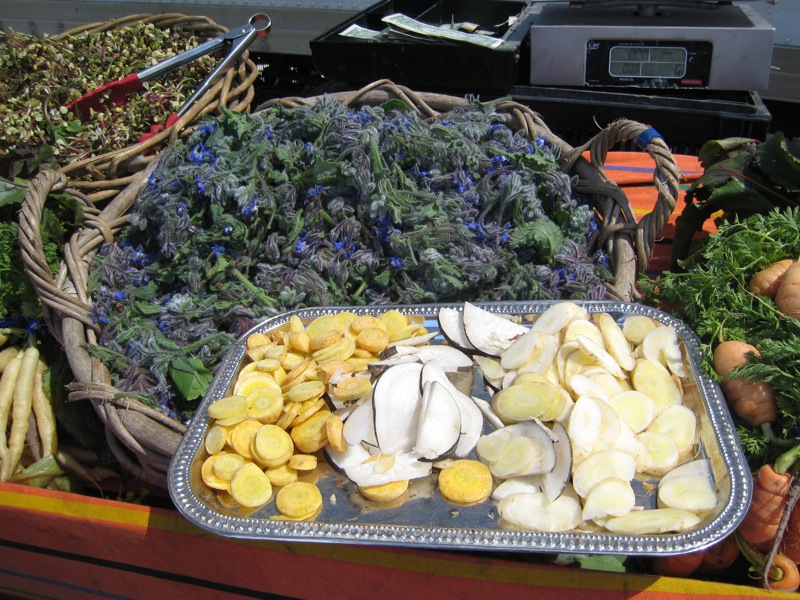
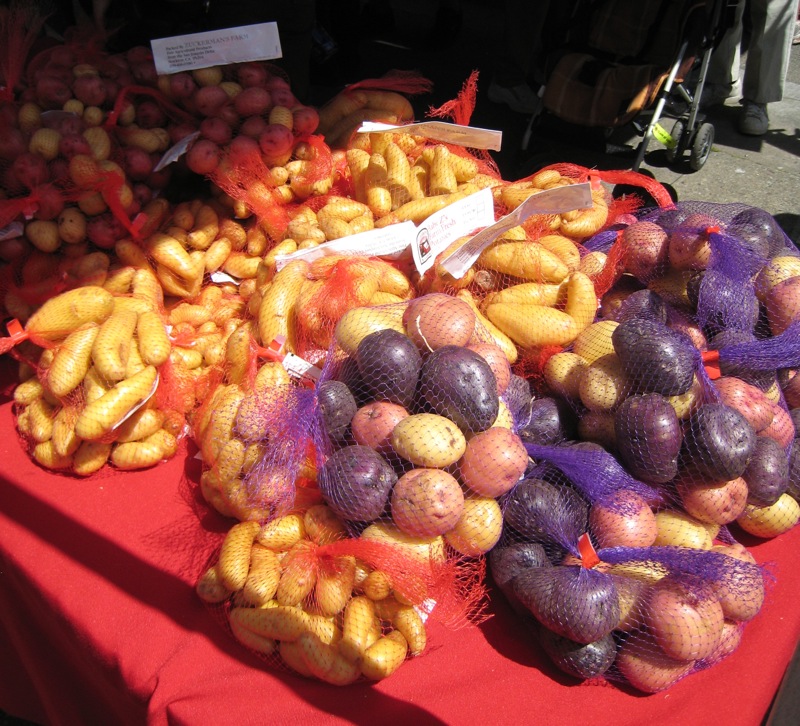
Aside: In general, the hotel was running very well, especially the catering: we were treated to several excellent meals. I particularly liked Hyatt’s emphasis on sourcing great food from the nearby region. I’ve long been a fan of eating local, and this is all the more important since the Gulf Coast oil spill has devastated Louisiana’s fishing industry. Further, in a city renowned as New Orleans for a great culinary tradition, it would be idiotic and shameful not to emphasize local specialties made from local ingredients.

fish on ice

My part in the proceedings was small. After the opening speeches, there was a talk by Melissa Fisher, an anthropologist studying women on Wall Street. It was a bit of a stretch for her to bring her talk around to women and business travel, which may illustrate how little the topic is studied. Then Elisa Camahort Page of BlogHer gave us a look at BlogHer’s very interesting research on women and social media.

Then my fellow panelists (Holly Burns and Diane Cu) and I were invited onstage to answer questions such as “What creates a memorable travel experience (good and bad)?” and “What motivates a woman to share that travel experience?”

My answer to the latter was to quote something Trish had said earlier: “My job is to tell people stories.” Well, that’s not actually what I get paid to do (though I would like to), but being a storyteller is such a huge part of my personality that I can’t not do it. Trish had also recommended: “When you travel, do some field reporting of your own – get to know a community.” Which is exactly what I love to do.

The audience seemed interested, listening closely and asking questions even though we were the last item before lunch. A notable difference from the tech conferences I usually attend, aside from the gender ratio, was that nobody except us bloggers had her head buried in a laptop or iPhone – they were actually giving us their full attention.

In the afternoon, the attendees broke into small groups to discuss and recap the day’s topics. This gave the Hyatt staff opportunity to hear from their customers, which probably was – certainly should have been – the point of the whole event. I didn’t attend any of these sessions, but from other conversations I gleaned a lot of what they probably heard about the concerns, needs and desires of women traveling on business.

I have traveled a great deal on business myself, usually alone (I have often found myself the only woman traveling solo in business class on a flight). I don’t seem to be a representative sample, however: most of the women I heard from were far more concerned with basic safety than I am ever conscious of being. Oh, I am careful and do not expose myself to danger, but I just don’t think about it much one way or the other.

What concerns me more is loneliness. I hate eating meals alone and being in a hotel room at night with nothing to do but work or watch TV. But I’m not a hanging out in bars type, and I empathize with most women’s preference not to get hit on by random men. Women traveling alone tend to gravitate towards one another, given a chance – that’s how I ended up helping to smuggle an ostrich out of Africa…

But, if you don’t like eating or hanging out in a hotel bar alone, how will you find those other women? Here’s where hotel chains could help. An interesting experiment during the Women & Business summit was a smartphone app custom-designed by a company called Yapmo. It was meant to help attendees interact during and after the conference, for Hyatt to ask them questions during and after, and maybe to help them retain an ongoing sense of community. Build out this online community of women, and there’s a good chance that some of them will cross paths from time to time in Hyatt hotels around the world. An added benefit for the community members would be networking outside our usual industry boundaries, which could lead to some serendipitous outcomes.

I’d be interested in participating in such a project, from both the software and community angles – and you can bet I let Hyatt know it!

photo at top: interior of the new Hyatt Regency New Orleans

Map of Landour, Mussoorie, India

This is a scan of a paper map I have in storage somewhere (I hope – I need to do a better scan if I can find it again), showing part of Landour and Mussoorie, where Woodstock School is located. Click to enlarge the picture, and you’ll see that many of the homes have names, dating back to the British founders of the town who built them, usually as holiday getaways from the heat of the Indian plains. Walter Scott was popular in those days, so names were often taken from his books (which seems odd in modern India, but lends an air of quaint antiquity).